Family Office · 7 November 2026 · 7 min read
The Disciplined Board: Building Long-Term Investor Conviction
Why continuous investor relations and transparent reporting matter more than quarterly management presentations.
The Architecture of Trust
Capital allocation is fundamentally an exercise in risk mitigation. When an investor transfers funds into a business, an asymmetry of information immediately emerges. Founders live within the daily operational reality; investors see only what is reported to them. In the absence of consistent, structured communication, anxiety fills the void.
Many founders treat investor relations as a defensive necessity, engaging only when preparing for another funding round or when a liquidity constraint emerges. This approach inevitably erodes conviction. Long-term investor support is built during quiet operational quarters, through clear communication of both progress and material operational headwinds.
The Anatomy of an Effective Shareholder Update
Investor updates should be brief, consistent, and data-driven. A monthly or quarterly briefing must not resemble a commercial marketing brochure. Experienced allocators recognise uncalibrated optimism and view it as operational immaturity.
A robust shareholder update follows a predictable structure:
- Executive summary: high-level performance against prior milestones, current cash runway, and net burn rate.
- Core operational metrics: revenue, gross margins, customer acquisition trends, and cohort retention presented with comparative historical baseline figures.
- Strategic roadblocks: candid disclosure of failed experiments, key personnel vacancies, or product delays.
- Specific capital and network requests: introductions to target commercial partners, advisory guidance, or strategic prospective hires.
By systematically reporting metrics against prior forecasts, a founder demonstrates operational command. Predictability, even predictability of modest performance, is far more valuable to an institutional investor than unforecasted volatility.
Managing the Board Dynamic
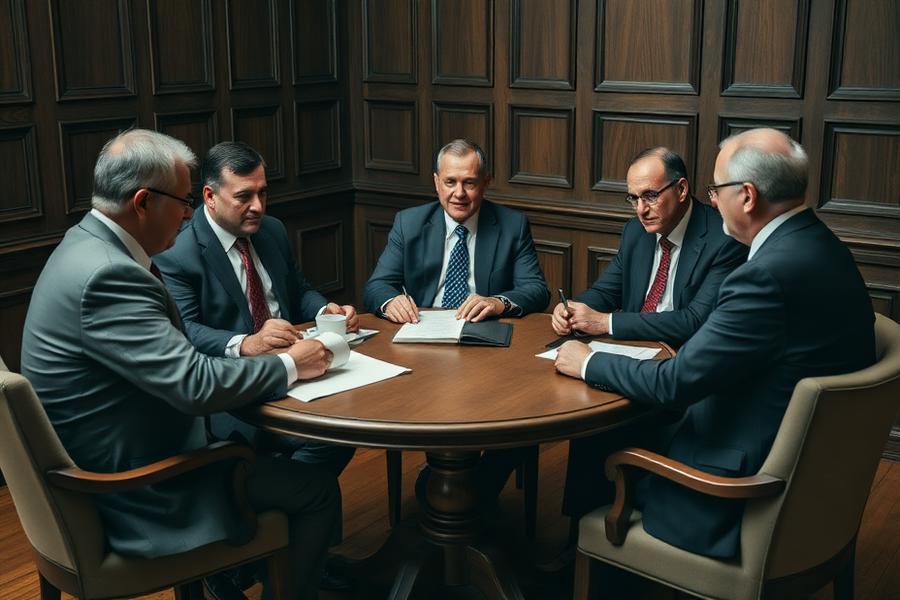
The boardroom should not be a venue for performance theatre. If a board meeting consists entirely of a founder presenting an eighty-page deck for three hours, the governance function has broken down. The purpose of governance is strategic debate, risk evaluation, and institutional oversight.
High-functioning leadership teams circulate the comprehensive board pack at least forty-eight hours prior to the session, establishing the explicit expectation that materials have been reviewed in advance. The actual meeting should focus on one or two strategic inflection points: capital expenditure decisions, executive compensation, international expansion, or enterprise risk management.
Independent board members must be chosen with immense care. Early board seats given exclusively to venture capital investors skew discussions toward short-term valuation milestones. Introducing an independent director with deep domain expertise can alter boardroom dynamics, introducing operational balance to venture pressures.
Communicating Negative Developments
The true test of an executive's investor relations framework occurs when performance misses expectations. When an enterprise loses a critical enterprise client, experiences significant executive turnover, or discovers a regulatory issue, the speed of disclosure is vital.
The golden rule of corporate governance is simple: bad news must travel faster than good news. Surprising a board or major shareholders with a severe liquidity shortfall or a key metric failure destroys credibility instantaneously. When difficult news is communicated early, paired with an objective analysis of the cause and a concrete remediation plan, sophisticated investors usually lean in to assist. They invest in the team's ability to navigate crises, not the absence of operational challenge.
The Strategic Payoff of Consistency
Investor conviction is cumulative. When the time comes to secure bridge debt, expand a working capital facility, or lead an internal financing round, the decisions of investment committees depend on the patterns established over the preceding years. Founders who demonstrate disciplined reporting, rigorous capital stewardship, and intellectual honesty discover that their existing investors become their most dependable advocates. Trust is built through structural transparency over extended periods.
